














Marrakech loves a good love story. And the story of Riad 72 has all the ingredients of one.
There was a mother who fell in love with Marrakech. A daughter from Milan who initially had little desire to leave her life behind. A historic palace in the Medina. Fashion and photography. A renovation that would change the way the house was perceived — and, in a small but significant way, help change the way Marrakech itself would be experienced.
And, somewhere along the way, there was love.
Giovanna Cinel came to Marrakech from Milan, where she had worked as a photographer and stylist, immersed in the world of fashion and visual culture.
She did not arrive with an immediate desire to make Marrakech her home.

But the city had other plans. She met her future husband after moving there. They fell in love, married, and eventually had a son.
What began as a move she had not particularly wanted became a life.
And the house that would become Riad 72 became part of that story.
Before boutique hotels became Marrakech
In 2001, Giovanna opened Riad 72.
It is difficult to understand the significance of that date from today’s perspective.
Marrakech is now synonymous with extraordinary boutique hotels and riads. There are intimate design hotels hidden behind ancient doors, restored palaces, private houses, concept hotels, rooftop restaurants, spas and some of the most sophisticated hospitality in North Africa.
But in 2001, this world barely existed. Riad 72 was one of the first true boutique design hotels in Marrakech.
And that makes its history more interesting than simply being the story of a beautiful riad.
It helped open the door.
The idea was deceptively simple: take a historic Moroccan house, preserve its architecture and sense of place, but introduce a completely different approach to interiors, service and hospitality.
The Riad did not need to become a grand hotel. It could be something more intimate. More personal. More design-led. Others followed.
And Marrakech gradually became the extraordinary hotel destination it is today.
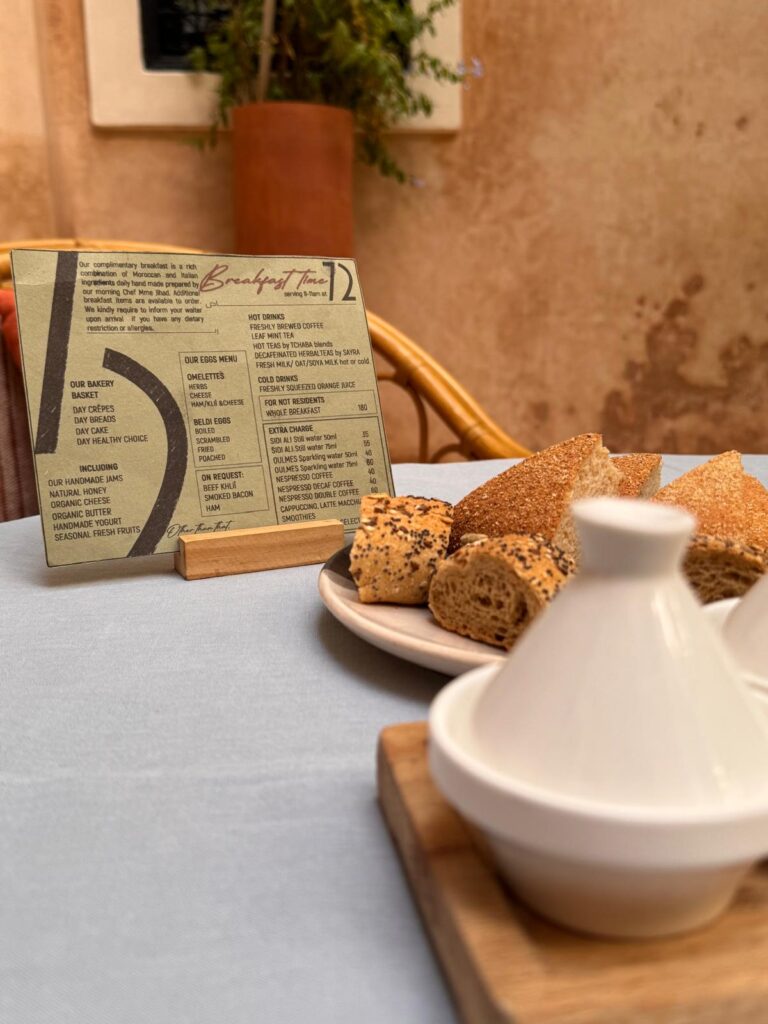
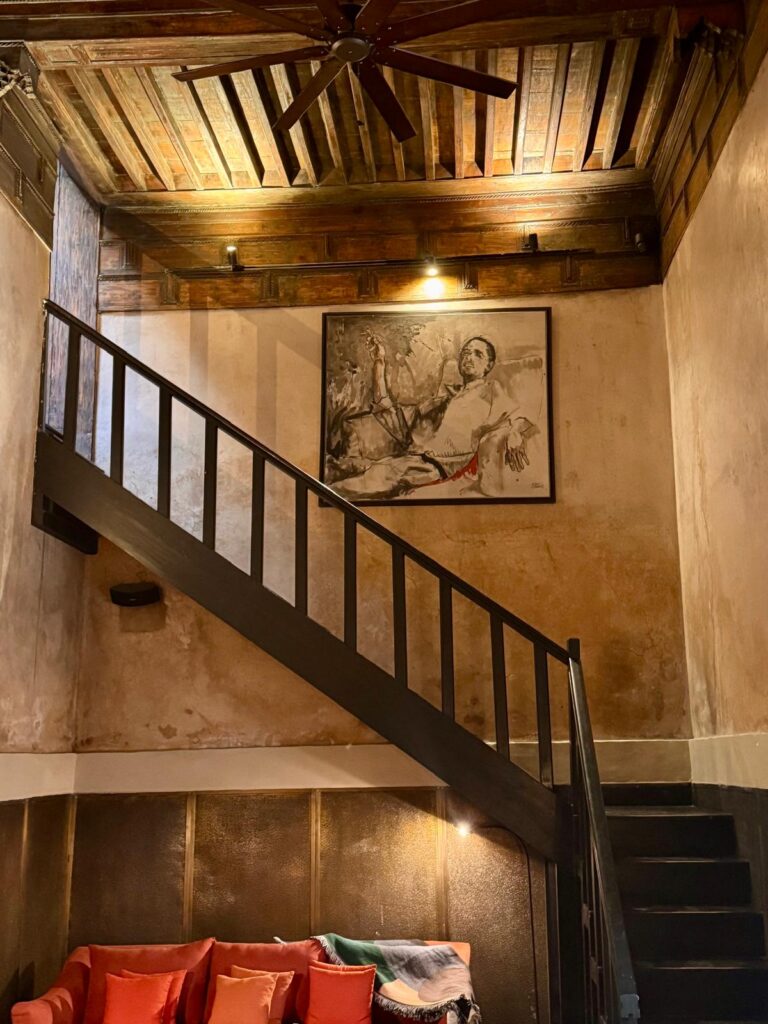
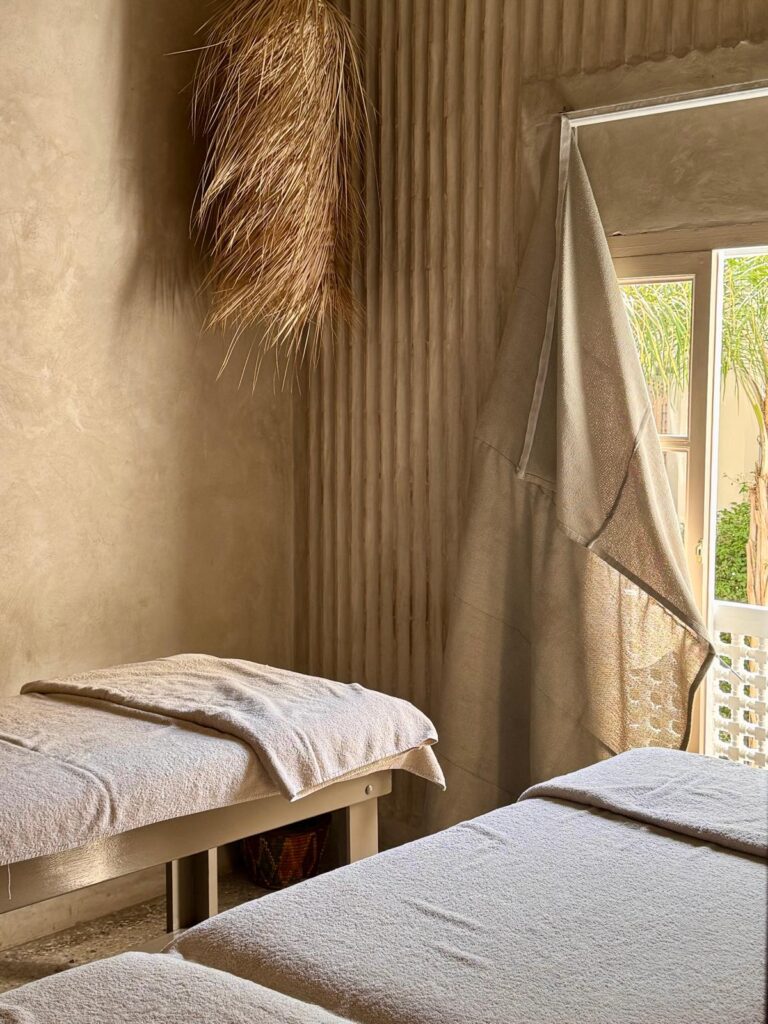
A historic palace with an extraordinary privilege. The building itself is part of the story.
Riad 72 occupies what was once one of the area’s grand real-estate properties, a historic palace whose height is unusual within the Medina.
The property was granted special permission to build higher than the traditional limits, which is why its rooftop today sits among the highest in the old city.
Because the building is historic, its original structure cannot simply be altered.
The floors, ceilings and essential architectural elements have to be preserved.
For Giovanna, the renovation was therefore less about rebuilding than about reinterpreting.
She spent around a year working on the transformation, carefully preserving the original bones of the palace while completely changing its atmosphere.
A Milanese eye in the Medina
That is where Giovanna’s background becomes so important.
She came from Milan. From photography. From styling. From fashion.
And you can feel it throughout the house.
There is an instinct for composition that is difficult to manufacture. A photographer’s sensitivity to light. A stylist’s ability to juxtapose objects, periods and textures.
The aesthetic is deliberately eclectic.
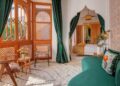
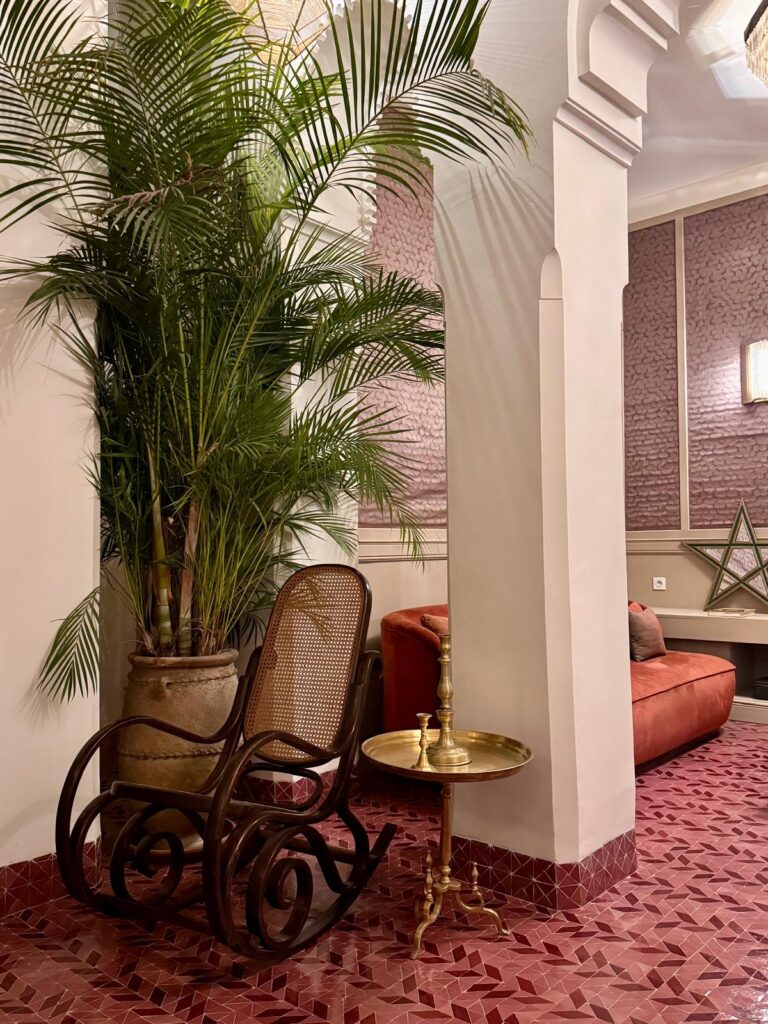
Vintage meets colonial references. Art Nouveau sits alongside Moroccan craftsmanship. Contemporary pieces appear beside older objects. Nothing feels as though it belongs to a single decorative period.
And the most interesting pieces are not generic.
Giovanna spent considerable time researching individual objects and artworks, looking for pieces that would give the house its own vocabulary.
The result is not a hotel that looks “Moroccan”.
It looks like someone with a very particular eye has lived here for a very long time.
The room that took me to Bangkok
There is one room in particular that immediately brought another house to mind: Jim Thompson House in Bangkok.
Jim Thompson, the American silk entrepreneur, created a remarkable home in Bangkok by bringing together traditional Thai architecture, Asian art, antiques and objects collected during his travels.
The connection I felt at Riad 72 is not literal. It is the feeling of entering a home shaped by curiosity. In the main salon, a painting of a reclining woman immediately draws the eye. Around it, the room feels collected rather than decorated.
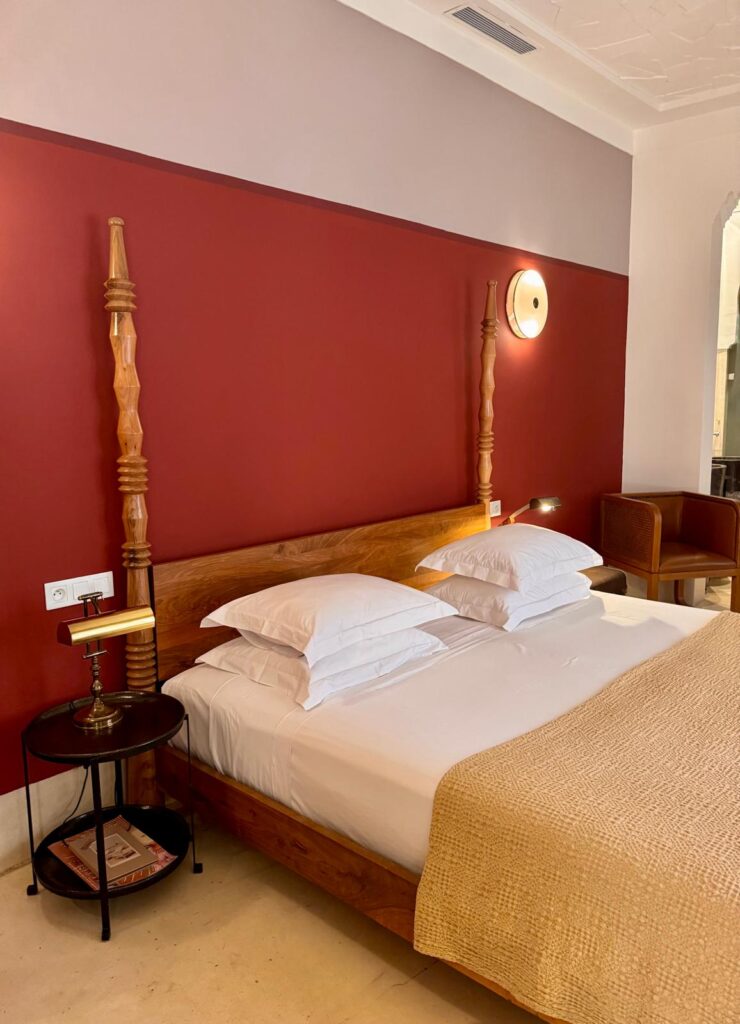
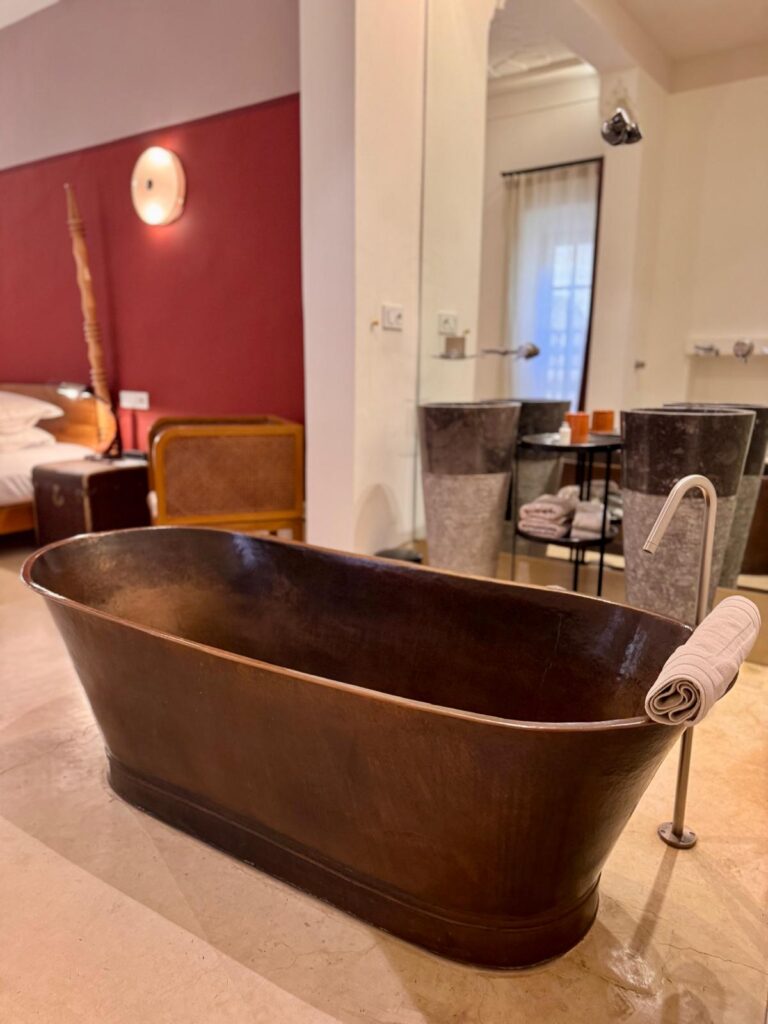
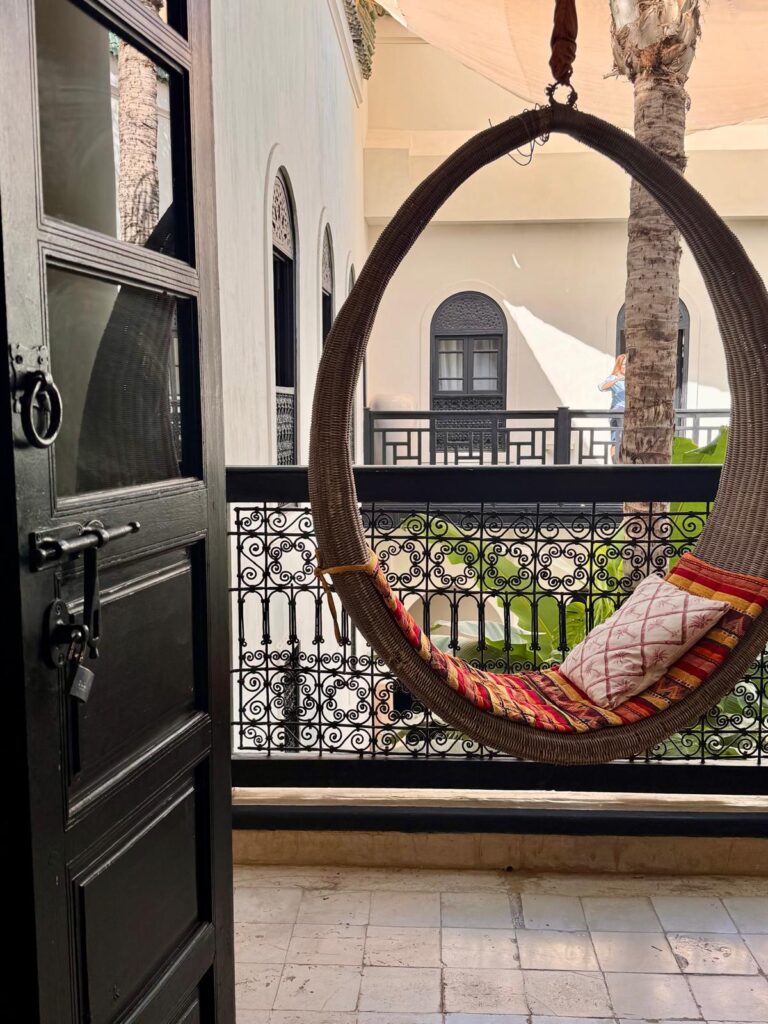
That distinction matters. The pieces do not seem to be there because someone needed to complete a design scheme.
They feel chosen because someone loved them. And that is perhaps one of the greatest strengths of Riad 72.
Morocco in the ritual, Milan in the eye
The experience begins with a very Moroccan welcome.
Perfumed orange water is poured over the hands in the traditional gesture of hospitality, followed by mint tea.
It is an old ritual, beautifully simple, and a reminder that however contemporary the interiors may feel, the soul of the house remains firmly rooted in Marrakech.
That contrast is everywhere. Morocco in the ritual. Milan in the eye. The architecture belongs to the Medina.
The sensibility belongs to a woman who arrived from one of Europe’s great fashion capitals.
The art of letting in light
One of the challenges of working with a historic riad is light.
Traditional riads are inward-looking. The courtyard is the heart of the house and much of the natural light comes from within rather than through large external windows.
The original structure could not simply be opened up.
So the solution was to introduce a more contemporary feeling without compromising the architecture.
More light. Lighter visual elements.
A greater sense of space. It is a subtle intervention, but an important one.
The house feels historic without ever feeling heavy. Two rooftops above Marrakech.
And then there are the two rooftops.
One of them is among the highest in the Medina — a direct consequence of the extraordinary history of the building and the permission it once received to rise above the traditional skyline.
The view is spectacular.
From here, Marrakech spreads out in every direction: the ochre rooftops, palms, minarets and domes, and, on clear days, the Atlas Mountains beyond.
At sunset, the city becomes almost impossibly beautiful.
The light changes every few minutes.
The Medina turns from ochre to gold to deep terracotta. It feels almost like looking at one of Giovanna’s photographs.
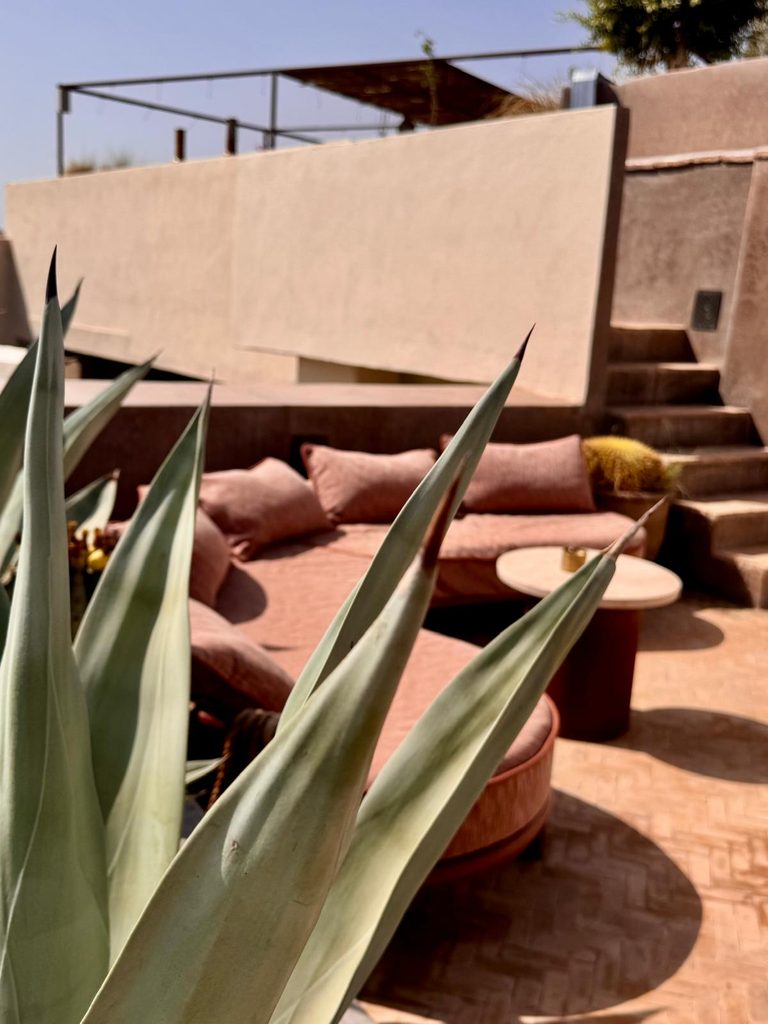
The second rooftop is more intimate, another place to slow down and experience the city from above.
Together, they are one of the property’s greatest pleasures.
La Table du Riad
The restaurant follows the same philosophy.
La Table du Riad has a short, elegant menu that feels perfectly in keeping with the house.
The cuisine is rooted in Moroccan gastronomy and traditional flavours, but there is a more refined and contemporary approach to the presentation.
There is confidence in the restraint.
No unnecessarily long menu.
No need to overcomplicate the food.
Just a carefully considered selection of dishes that makes the restaurant feel like a natural extension of the Riad.
It is elegant in exactly the same way the interiors are elegant.
A hotel that helped create a destination
Perhaps this is the part of Riad 72’s story that deserves to be remembered most.
When it opened in 2001, Marrakech was already a fascinating destination, but the sophisticated boutique-hotel ecosystem we know today was still in its infancy.
Riad 72 demonstrated that there was another way to stay in the city.
Not necessarily in a vast palace.
Not necessarily in a conventional luxury hotel.
But in a historic house, with a strong aesthetic identity, intimate service, serious attention to food and design, and a connection to the Medina itself.
It helped establish the idea that the riad could be the destination.
That was important.
Because once travellers discovered that experience, the possibilities multiplied.
More riads were restored. More designers arrived. More chefs opened kitchens.
More rooftops appeared above the Medina.
And gradually Marrakech became what it is today: one of the world’s great destinations for boutique hospitality, design, gastronomy and lifestyle.
Riad 72 did not create all of that.
But it was there early enough to help make it possible.
A love story that became a hotel
There is something rather beautiful about the fact that the story began with a woman who was not initially eager to leave Milan, and who eventually found in Marrakech not only a home and a career, but a husband and a family.
The house became a hotel. The hotel became a reference. And the city around it changed.
Yet Giovanna’s relationship with the property remains personal. She continues to move between Italy and Marrakech, returning regularly and remaining involved with the evolution of the house.
Perhaps that is why Riad 72 never feels like a concept.
It feels lived in.
And after more than two decades, that is increasingly rare.
Marrakech loves a good love story.
This one happens to have been written in the Medina, somewhere between Milanese fashion, Moroccan craftsmanship, photography, architecture and a historic palace looking out over the rooftops of the city.
It began with a house. It became a hotel. And, in many ways, it helped open the door to the Marrakech we know today.
The Newcomer: Maison Zamane, Marrakech
Marrakech has no shortage of beautiful riads. The challenge is arriving at one and feeling that you haven’t seen it before.
Maison Zamane, one of the city’s newest addresses, manages to do just that.
Tucked away in the Medina, this small maison has only seven rooms and suites. It opened in 2026 and, for now, still feels like a newcomer rather than an established name on every Marrakech hotel list. There is something rather appealing about discovering it at this stage.
The first impression is not one of extravagance. It is restraint.
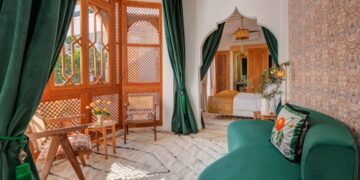
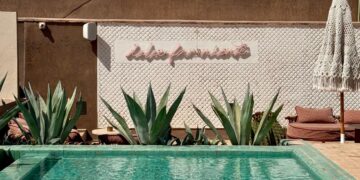
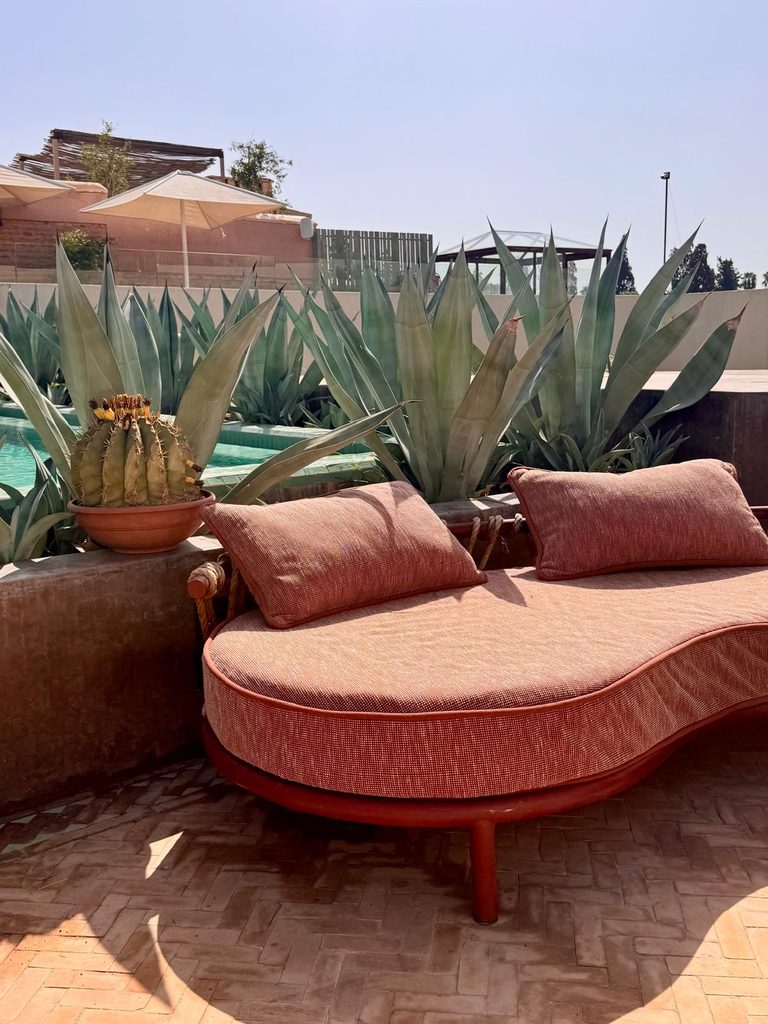
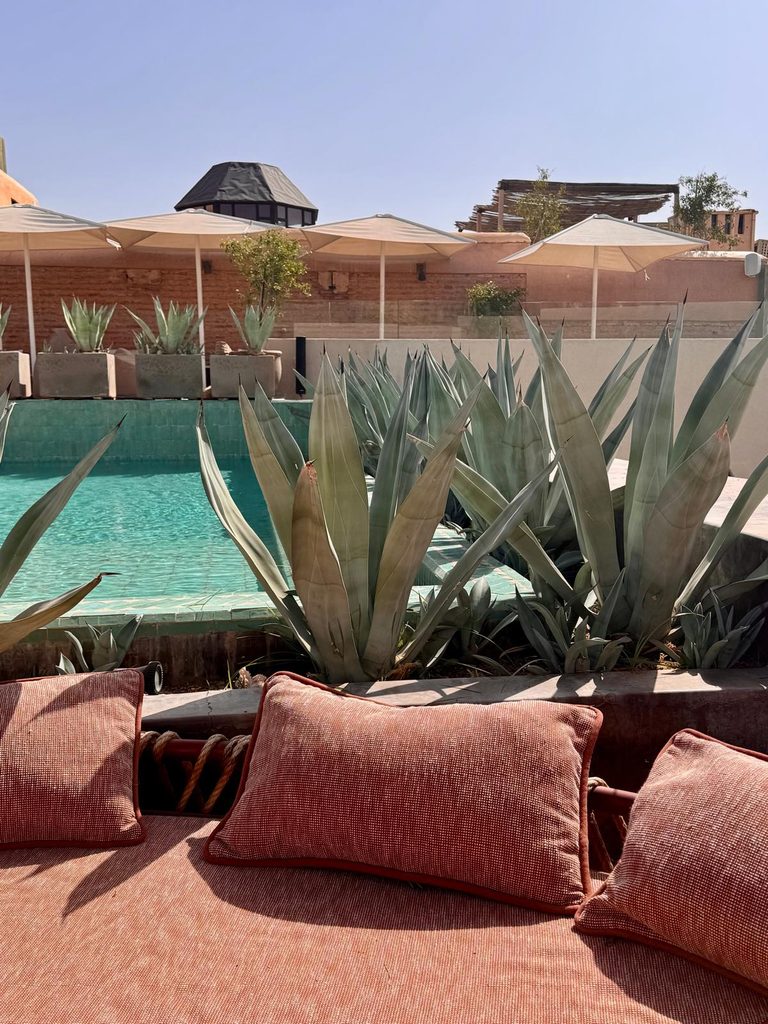
The house is built around water and light, with two pools creating different moments within the property. The architecture follows the vocabulary of traditional Moroccan houses — the central courtyard, handmade zellige, tadelakt walls, carved wood and natural stone — but the decoration takes a much more contemporary direction.
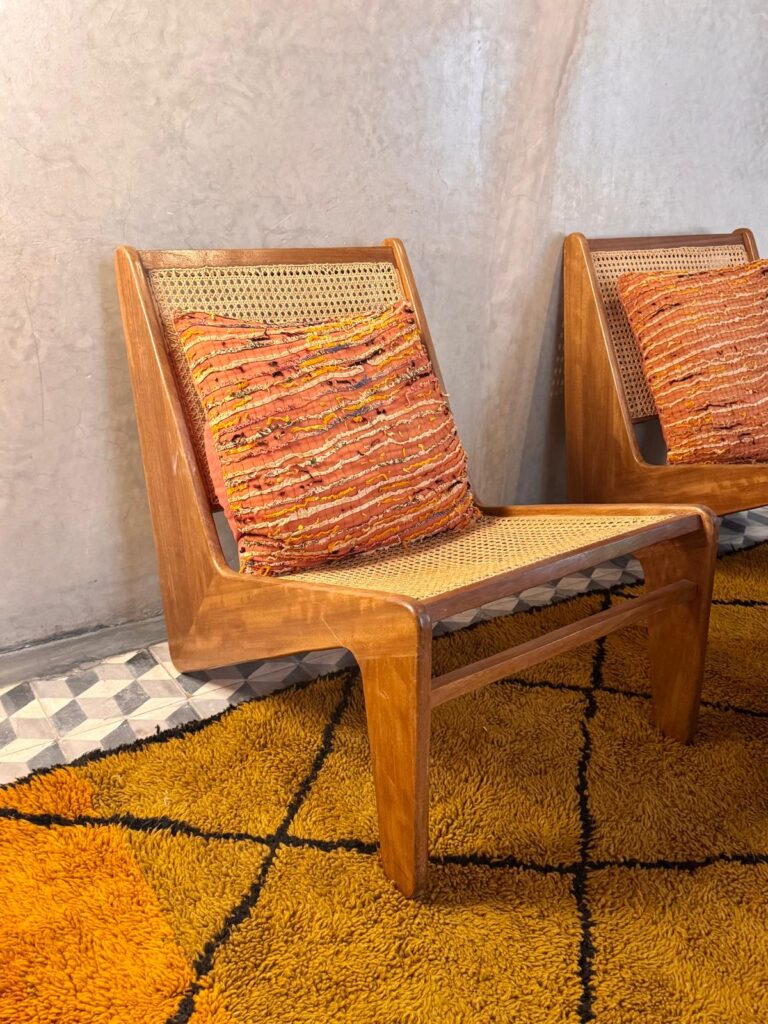
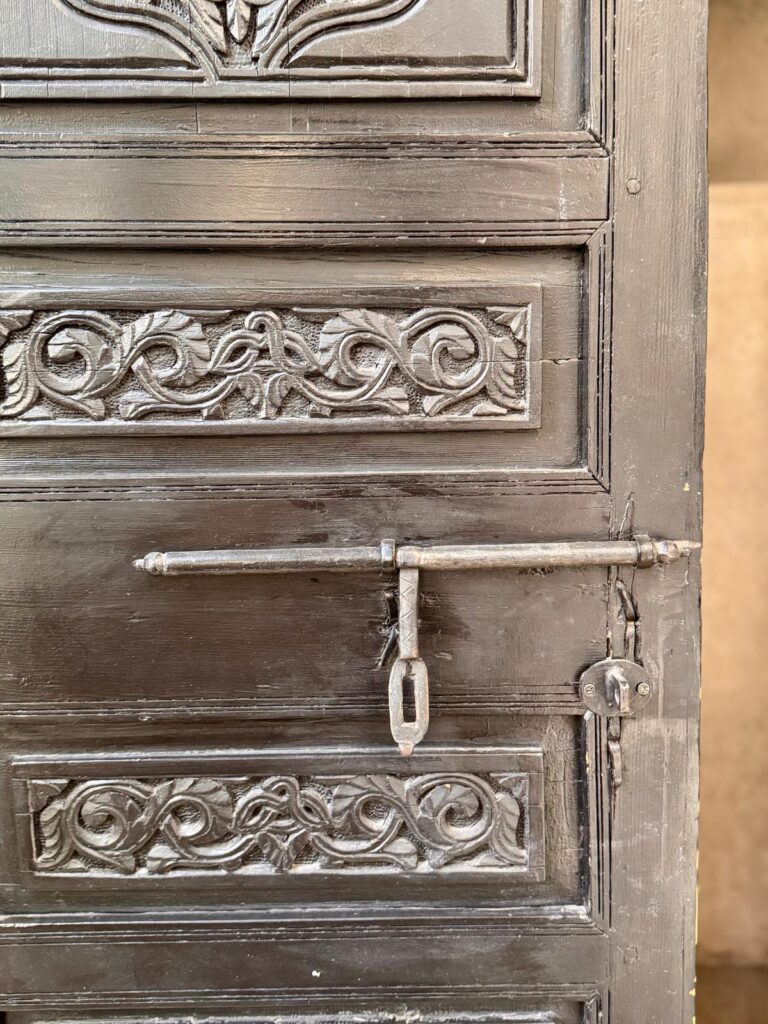

The palette is deliberately quiet: warm whites, sandy tones, terracotta, muted greens and the natural colours of the materials themselves. Nothing feels overly coordinated. Textures do most of the work.
There are limewashed and tadelakt surfaces with their slightly irregular finish, woven fabrics, timber details and pieces of Moroccan craftsmanship that feel chosen rather than collected simply to make a point. The result is tactile rather than decorative.
And then there is the light.
It moves through the house throughout the day, catching the water in the courtyard, creating shadows across the walls and changing the atmosphere of the rooms almost without us noticing. It gives the interiors something very photographic — but never in a way that feels designed solely for Instagram.
There is also a surprisingly European sensibility to the interiors. The Moroccan references are there, but they have been edited through a more contemporary eye. I kept thinking of fashion photography: clean compositions, natural textures, strong silhouettes and plenty of negative space.
It feels closer to a private Mediterranean house than to a traditional riad dressed in every possible Moroccan reference.
That sense of intimacy is helped by the size of the property. Seven rooms changes the whole experience. There is no lobby to disappear into, no long corridors, no feeling of being one of hundreds of guests. The courtyard becomes the living room, the pool almost an extension of it, and the rooftop another room — this time with Marrakech as the view.
The service follows the same philosophy.
Kamal is one of those people who seems to notice what is happening without making a performance of it. He accompanies guests, helps with the practical details, recommends places and is simply around when needed. There is a warmth to the service that feels personal rather than scripted.
It is worth mentioning because the first reviews of Maison Zamane, still very limited given how recently it opened, repeatedly point to the team as one of the property’s strengths. That is often the first real test of a new hotel: beautiful rooms can be designed, but genuine hospitality is much harder to manufacture.
Food is another part of the experience. The table around the courtyard keeps things intimate, while the rooftop changes character towards the end of the day. From up there, the Medina becomes a landscape of terracotta rooftops, minarets and changing light.
It is a very different Marrakech from the one experienced at street level.
The spa continues the idea of slowing down, with a traditional hammam, massages and treatments. After a few hours walking through the Medina, the transition from the noise and heat of the city to the quiet of the hammam feels particularly welcome.
And perhaps that is where the name Maison Zamane becomes most convincing.
Zamane means “time” in Arabic.
The concept could easily have become another hotel marketing line. Here, however, it seems to have been translated into the way the house actually works.
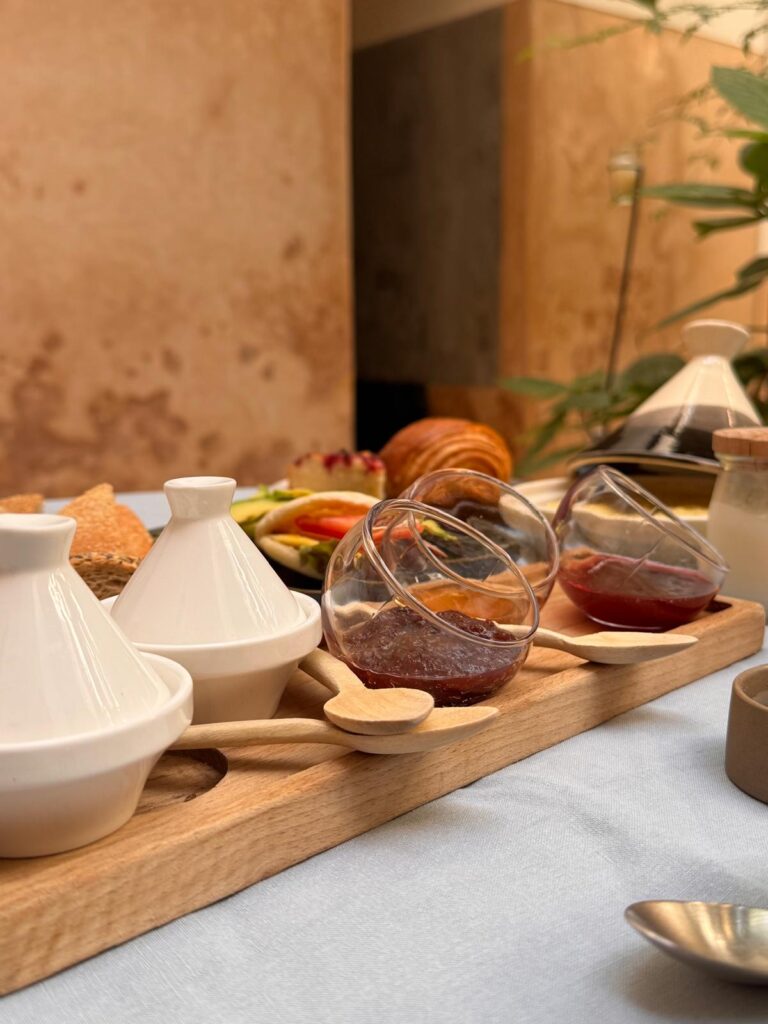
There is time for breakfast.
Time by the pool.
Time for a hammam.
Time to sit on the rooftop and watch Marrakech change colour.
And, importantly, time to do absolutely nothing.
Maison Zamane is still a newcomer. It hasn’t accumulated years of reputation or become one of those Marrakech addresses that everyone already knows. There are very few reviews, very little noise around it and still a sense that the house is finding its place.
For a traveller, that is part of the attraction.
The city outside remains intense, colourful and wonderfully chaotic.
Inside Maison Zamane, everything is quieter.
The architecture is Moroccan, but the eye is contemporary. The decoration is sophisticated without feeling precious. The service is attentive without becoming formal.
It doesn’t try to compete with Marrakech.
It simply creates a place from which to experience it — and, occasionally, to escape it.